
When light bounces off a surface, it is called reflection, and that simple fact shapes almost every photograph and video frame you see. Some reflected light stays sharp and mirror-like. Some scatters into a soft glow. Some is redirected on purpose with a wall, reflector, ceiling, or bounce card to make faces look better and scenes feel more natural.
TLDR: Reflection is the general term for light bouncing off a surface, while diffusion describes light being scattered and softened. In photography and video, bounce lighting uses reflected light to create softer shadows and more flattering skin tones. For example, bouncing a small LED panel into a white wall can make the apparent light source 5 to 10 times larger, which often reduces harsh facial shadows by a noticeable amount. In a simple interview setup, one bounced light can replace two direct lights if the room has pale walls and enough output.
Reflection: The Core Idea
Reflection happens when light hits a surface and returns in another direction. The behavior depends on the surface. A clean mirror reflects light in a tight, predictable way. A white painted wall reflects light in many directions. A black shirt reflects very little useful light, which is why it can go dark so quickly on camera.
Physics gives this a neat rule: the angle of incidence equals the angle of reflection. In plain language, light bounces off a smooth surface at the same angle it arrived. If a beam hits a mirror at 30 degrees, it leaves at 30 degrees on the opposite side.
That rule matters on set. If a window is visible in a glossy tabletop, moving the camera a few inches can make the glare vanish. The light did not disappear. You simply moved out of the reflected path.

Specular Reflection vs Diffuse Reflection
Not all reflection looks the same. The two main types are specular reflection and diffuse reflection.
- Specular reflection is sharp and directional. Think mirrors, polished cars, glass, chrome, shiny skin, water, or glossy tile.
- Diffuse reflection scatters light across many angles. Think paper, fabric, matte paint, clouds, or a white foam board.
A specular highlight shows the light source clearly. That bright white streak on a wine bottle? It is not random. It is a reflection of the softbox, window, or lamp. A diffuse surface does not show a clear image of the light. It spreads brightness instead.
This is why matte makeup reduces shine on skin. It breaks up specular reflection. The skin still reflects light, but less of it comes back as a hard glossy patch.
Diffusion: Softening Light Before or After It Hits
Diffusion happens when light is scattered. In photography and video, people usually create diffusion by passing light through a material such as silk, tracing paper, frosted plastic, grid cloth, or a softbox front panel.
Here is the part that trips people up: diffusion is not only about making light “weaker.” It changes the size and spread of the source. A bare bulb is tiny, so it makes crisp shadows. Put that bulb behind a large white sheet, and the sheet becomes the new source. Now the shadows soften.
The catch is that diffusion eats light. A thin diffusion sheet may cut output by about half a stop. A thicker one can cut 1 to 2 stops or more. Expect to raise your light power, open the aperture, or increase ISO if your image gets too dark.
Bounce Lighting: Reflection Used On Purpose
Bounce lighting means aiming light at a surface so the reflected light becomes the useful light. Instead of blasting a subject directly with an LED, you point the LED at a wall, ceiling, card, or reflector. The bounced surface turns into a larger, softer light source.
This trick is everywhere. Wedding photographers bounce flash off ceilings. Documentary crews use white walls for quick interviews. Product photographers place white cards beside objects to lift shadows. Cinematographers bounce strong lamps into muslin for a soft, natural feel.

Bounce lighting works best when the bounce surface is:
- Bright, such as white or light gray
- Neutral in color, so it does not tint the subject
- Large enough to spread light softly
- Close enough to the subject to stay efficient
A white ceiling can be great. A wooden ceiling can make faces look orange. A green wall can make skin look sickly. Honestly, it feels like one of the most annoying beginner mistakes because the light can look “soft” but still have a weird color cast that takes ages to fix later.
Why Surface Color Matters
Every surface changes reflected light. White reflects most visible wavelengths fairly evenly. Black absorbs more light and reflects less. Red surfaces reflect more red than blue or green. That reflected color can contaminate your shot.
This is easy to see near grass. Shoot a portrait in a park at midday, and the underside of the chin may turn slightly green. The grass is bouncing green light upward. In a room with red curtains, shadows may become warm and muddy.
For clean work, use neutral bounce materials. White foam board is cheap and reliable. Silver reflectors are brighter and punchier. Gold reflectors add warmth, which can look nice at sunset but fake indoors. Black flags do the opposite. They absorb light and create shape by removing unwanted reflection.
How Reflection Affects Exposure and Contrast
Cameras record reflected light, not objects themselves. A white shirt appears bright because it reflects a lot of light into the lens. A black jacket appears dark because it reflects less. This is why camera meters can get fooled.
A scene full of snow may be underexposed by an auto mode because the camera tries to turn bright snow into middle gray. A black backdrop may be overexposed for the same reason. The camera is reacting to reflected brightness, not meaning.
In video, this matters even more because movement reveals every lighting error. A shiny forehead can flare as someone turns. Glasses can catch a rectangular softbox. A product label can go unreadable when a reflection crosses the text.
Reflection in Glass, Metal, and Water
Glass and metal are special because they mostly show other things. A chrome object is almost all reflection. Photographing it means controlling what it reflects. The same goes for sunglasses, bottles, watches, cars, and kitchen appliances.
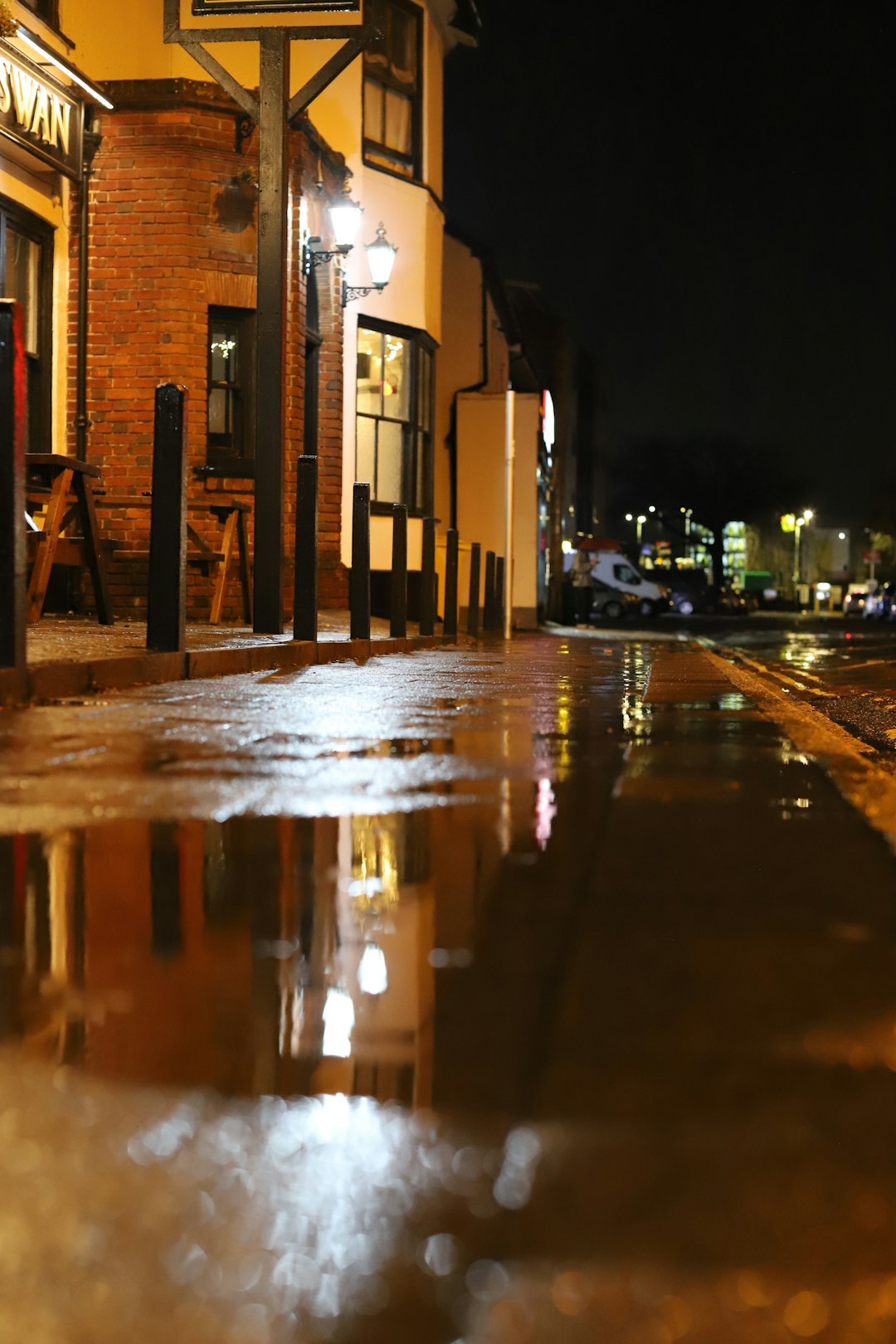
Water adds another layer. Calm water reflects like a mirror. Rough water breaks reflections into moving fragments. Wet streets at night reflect signs and headlights, which can make a city scene feel richer without adding extra lights.
Practical Tips for Better Photos and Video
- Move the light first. Small angle changes can remove glare faster than camera settings.
- Use a larger source. Bigger light sources create softer shadows when placed close to the subject.
- Check the bounce color. White is safe. Colored walls can cause strange skin tones.
- Watch glasses and glossy skin. Raise, lower, or shift the light until reflections stop aiming at the lens.
- Add negative fill. Use black fabric or foam board to reduce unwanted bounce and restore contrast.
- Use flags and cutters. Block light from hitting shiny surfaces you do not want to reveal.
It drives me a little crazy when camera monitor tools hide zebras, false color, or waveform settings three menus deep. Those tools help spot bright reflections before they ruin a take. If you can turn them on quickly, use them. A blown highlight on skin or glass is often impossible to repair cleanly.
Simple Home Experiment
Try this with a phone flashlight, a white paper sheet, black fabric, and aluminum foil. Shine the flashlight directly at an object. Notice the hard shadow. Now bounce the light into the white paper and aim the paper toward the object. The shadow gets softer. Replace the paper with foil. The light gets brighter and more sparkly. Use black fabric, and the reflected light nearly disappears.
This tiny test explains a lot of studio lighting. Softboxes, reflectors, umbrellas, flags, and bounce boards are all ways to control where reflected light goes and how it looks when it arrives.
The Key Takeaway
Light bouncing off a surface is reflection. When that reflection scatters, it becomes diffuse reflection. When photographers and filmmakers aim light at a surface to create a softer source, they call it bounce lighting. Master these ideas, and lighting stops feeling mysterious. You start seeing walls, ceilings, cards, mirrors, glass, and fabric as tools. That is when images become easier to shape, not just capture.